
Prevention Plan
Bluffdale Elementary’s Prevention Plan 2026-2027
Our school’s mission is to:
Connect with every child, every day to ensure social acceptance and academic success!
Awareness of protective and risk factors allows school staff to connect with every student in our school. High academic expectations with intentional goals that are clear to both teachers and students promotes success.
Student Wellness & Prevention Plan
Prevention Overview:
Research shows that addressing behavior and wellness concerns before they occur is much more effective than trying to stop them after they start. These proactive efforts are our primary prevention strategies. These strategies focus on the root causes, like enhancing protective factors and decreasing risk factors, strengthen well-being and help students build resilience to thrive. They act as buffers against risk and promote resilience, healthy development, and positive outcomes. Risk factors are conditions that increase the likelihood of academic, behavioral, or mental health difficulties. Our school supports student development of Utah State Board of Education’s five protective factors; more information about these protective factors can be found using this link.
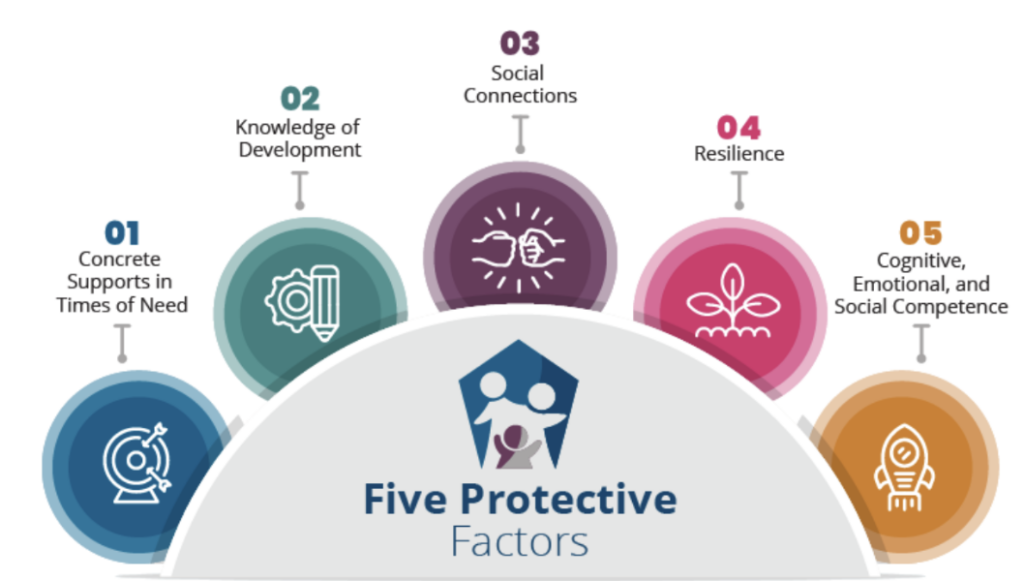
Our school supports student wellness by prioritizing primary prevention practices that are centered on building protective factors and promoting positive, intentional social, emotional, academic, and behavioral development for all students. This prevention plan includes universal strategies (for all students) as well as targeted strategies (for small groups or a few students) for each section below.
Student Engagement & Attendance:
Our school believes that attendance directly impacts academic achievement, social development, and future success. Attendance also reflects a student’s sense of belonging. Some of the efforts our school prioritizes to encourage student engagement and promote attendance are listed below:
- Our school uses Panorama early warning system to identify students who may be at risk of disengagement or absenteeism, which allows us to proactively support students in feeling connected and engaged at school.
- Our school staff cares about our students and is committed to getting to know them to help them feel a sense of belonging.
- Our school creates frequent opportunities for students to connect with each other, build friendships, and feel a sense of belonging with their peers during class, at recess and lunch, and throughout their day.
- Our school staff monitors attendance using the District dashboard and notifies parents of absences.
- Our school recognizes students who are on time for school through a “No Tardy Smartie” incentive; student numbers are randomly called over the intercom for students who are present in class to come to the office to receive a reward from administration.
- Our school uses “PAWS-ITIVE” referrals to recognize students who are at school and engaged in schoolwork and positive behaviors. A phone call is made to parents to celebrate the referral and a small reward is given to the student.
- Each week, administration, with the assistance of the school counselor, send home a Parent Square with attendance facts and statistics.
Social, Emotional, and Behavioral Well-Being:
Our school prioritizes prevention by offering support and services to our students and their families. Some of our everyday efforts, including the systems and strategies for supporting our students, are listed below:
- School-wide behavior system (PAWS) with whole school implementation at the beginning of the year. The traits for PAWS are “Practice Pawsitivity, Act Responsibly, Work and Play Safely, Show Respect.”
- Our school staff supports students’ skill development by clarifying behavioral expectations in all spaces throughout our school through school-wide teaching stations that define the expectation for behavior in each area of the school.
- School-wide positive reinforcement system.
- Student of the Month recognition for a student in each classroom.
- “Paws-itive” referral opportunities to recognize students with a positive phone call home from administrators.
- Behavioral training and expectations for all teachers and support staff.
- Each staff member is trained to use Precision Commands when encountering problematic behaviors.
- School-wide implementation of a social-emotional wellness program. This program emphasizes essential life skills, dealing with conflict, problem-solving, goal setting, bullying prevention, and emotion recognition and management.
- Our school has a Wellness Room that is available to all students.
- The “zones of regulation” are used in the Wellness Room. This allows students to identify which “zone” or emotional level they are in.
- Our school psychologist and school counselor are available to students who need additional support, including small group sessions that address grief, divorce, anxiety, social skills, emotion regulation, problem solving, impulse control, friendship, etc.
- A check-in and check-out system is in place with the school psychologist, school counselor, or another trusted adult for at-risk students before and after school. This gives each student the opportunity to create positive relationships and be individually recognized for good behavior; concerns are also discussed to help the student improve.
- DARE training for 5th grade students. Our school resource officer works with the students to teach alcohol and drug prevention.
- Student Leaders selected from each class to form a school-wide leadership team to assist with assemblies, office runs, positive modeling, etc.
- Student Leadership opportunities in the fifth and sixth grade through Safety Patrol.
- There is music playing both outside and inside the building five minutes before school starts to welcome our students each day.
- Our teachers greet the students at the door to welcome them each day.
- Teachers meet twice a week in a collaborative setting to ensure student needs are being met academically and emotionally.
- Our school has a strong volunteer base, including community leaders, who model positive behavior for our students.
- Our school behavior team meets bi-monthly with a focus on addressing root causes of behavioral concerns as well as to lead and implement school-wide strategies.
- Our school uses Panorama data management to identify students in need of additional support and proactively meet their needs.
- Our school provides access to District mental health and support resources through Student Services, which includes the Jordan Family Education Center and Mental Health Access Program.
- Our school provides access to academic support with District departments to support the success of every student.
- Our school’s mental health and student support providers (school counselors, school psychologists, clinical support, etc.) are trained and supported by District administration to follow current best practices in prevention and intervention efforts.
- Our school intervenes with early warning, content monitoring, and anonymous reporting tools with support from District specialists to identify and support students who may be at risk.
- Our school provides access to parent and family resources including a District partnership with the Cook Center for Human Connection’s Parent Mental Health Series platform which is shared with parents monthly through Parent Square and District web content.
- At Bluffdale Elementary, community involvement is a positive aspect of our prevention plan. Many of our school strategies involve parents and community members to assist us in creating a sense of unity and acceptance. Some of the activities include:
- Back to School Night
- PTA Red Ribbon Week (Drugs/Alcohol Awareness)
- PTA Yellow Ribbon Week (Kindness)
- PTA White Ribbon Week (Internet Safety)
- PTA Green Ribbon Week (Mental Health Awareness)
- Family Nights (4 per year)
- Parents and Pastries
- PAWS (Dads on our PTA who interact with students at recess)
- Weekly communication by administration with parents through Parent Square
Suicide Prevention
- Our school’s mental health providers and administrators are trained on and review District suicide risk intervention guidelines annually with support from Jordan District’s Student Services Team.
- All of our District’s staff participate in an annual crucial concerns training to maintain employment in the District, which covers topics such as suicide, bullying, and violence prevention. Additionally, our teachers are specifically taught and reminded each year of risk factors and warning signs for suicidal ideation to ensure they are prepared to respond to a risk when needed.
- Students identified who may be at risk of suicide receive interventions and support in partnership with their parents and guardians, appropriate to their individual needs. This may include a screening interview, parent/guardian collaboration, a safety plan, mental health recommendations/referrals (Jordan Family Education Center, Mental Health Access Program, etc.), a re-entry meeting, and regular follow-up.
- Our school prioritizes early intervention and utilizes several District supported tools to support student wellness when needed. These tools include content monitoring on student’s school accounts to respond to concerning content, SafeUT anonymous reporting for students to express concerns, and early warning data system through Panorama.
- Educators have access to resources, including talking points to educate students about suicide prevention. Live On Utah Playbook, Discussion Guide, Student Worksheet
- A check-in and check-out system is in place with the school psychologist, school counselor, or another trusted adult for at-risk students before and after school to help meet their emotional and behavioral needs.
- Bluffdale Elementary embraces Restorative Practices to encourage kindness, conflict resolution, accountability, and empathy.
Bullying Prevention
- Our school team proactively reviews relevant data on school climate, safety, and bullying by identifying vulnerable populations (e.g., racial and ethnic groups, LGBTQ youth, students with disabilities) and specific spaces where bullying may be likely to plan support accordingly.
- Our school’s staff is trained on school procedures for recognizing, reporting (SafeUT, content monitoring, etc.), and responding to bullying incidents at the beginning of the school year.
- All of our District’s staff participate in an annual crucial concerns training to maintain employment in the District which covers topics such as suicide, bullying, and violence prevention.
- Students involved in incidents of bullying as targets, aggressors, or witnesses receive support for their individual needs which may include suicide risk assessments, counseling and mental health services, Functional Behavior Assessment (FBA), Behavior Intervention Plan (BIP), a student wellness plan and/or parent/guardian contact—recognizing that targets, aggressors, and witnesses of bullying are more susceptible to school issues.
- Our school’s administrators have been trained on Bullying Action Planning through the District Wellness Team and continue to implement best practices in bullying intervention, with the overall goal of prevention.
- Our school prioritizes early intervention and utilizes several District supported tools to support student wellness when needed such as content monitoring on student’s school accounts to respond to concerning content, SafeUT anonymous reporting for students to express concerns, and early warning data system through Panorama.
- Through the social emotional learning program, students learn empathy, conflict resolution, problem-solving, kindness, and emotional regulation.
- Students are also taught what bullying is and what to do if it happens to them or someone they know. They are taught the “Stop, Walk and Talk” procedure to help avoid conflict and obtain help when needed.
- Parent Coaching resources are available to parents and guardians through Jordan School District Parent Coaching Flyer English, Parent Coaching Flyer Spanish
- Teachers greet students at the door each morning.
- Teachers are encouraged to have positive interactions with all students in the school whether the student is assigned to their class or not.
- Bluffdale “PAWS” (PBIS): Practice “Paws-itivity”, Act Responsibly, Work and Play Safely, Show Respect
- Flowchart of how to respond to Majors & Minors for when an incident occurs.
- Communication with administration and parents
Violence Prevention Plan
- Our school’s administrators are trained on the Comprehensive School Threat Assessment Guidelines (C- STAG), along with other members of our school’s threat assessment team which includes: Principal Moore, Assistant Principal Holyoke, our school psychologist, Mrs. Larsen, and our school counselor, Mrs. Gill.
- Our school has a process for timely response to school threats using Comprehensive School Threat Assessment Guidelines (C-STAG) and its decision tree. This includes warning potential victims and their parents/guardians.
- Our school’s staff and students are aware of school procedures for recognizing and reporting (SafeUT, content monitoring etc.) threats of violence. In our upper grade classrooms, we have the classroom teachers include the SafeUT card in their back to school materials for parents and students.
- Students who are affected by or who make threats of violence receive interventions that proactively support students by building skills, meeting needs, and problem solving that aligns with the school’s universal strategies. Students receive support appropriate to their individual needs which may include problem-solving, interviews, suicide risk assessments, Functional Behavior Assessment (FBA), Restorative Conferencing, Mediation, a Behavior Intervention Plan (BIP), counseling and mental health services, a student wellness plan and/or parent/guardian contact.
- Our school prioritizes early intervention and utilizes several District supported tools to support student wellness when needed: content monitoring on student’s school accounts to respond to concerning content, SafeUT anonymous reporting for students to express concerns, and early warning data system through Panorama.
- All of our District’s staff participate in an annual crucial concerns training to maintain employment in the District which covers topics such as suicide, bullying, and violence prevention.
- Our school implements a social emotional learning program which supports the students’ social and emotional well being. As the students participate in the program, they will practice the skills with classmates so that they can utilize the skills when situations arise.
- Our school psychologist and school counselor work with administration to discuss and develop a plan for students who have been violent or aggressive.
Please contact our administration for questions regarding our plan.